I’ve been intrigued with the idea of planing ribs level but hadn’t gotten around to making the special plane needed for this. This plane needs to be longer than a regular bench plane and equipped with a narrow blade that can be extended farther out. If successful it would be more efficient than the safe but slow scraping method I’ve been using.
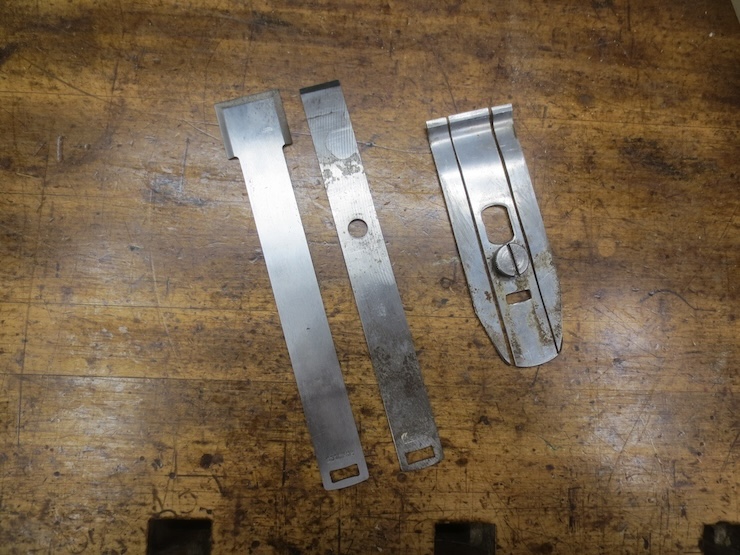
Some time ago I outfitted some of my planes with improved blades and chip breakers. I used some of the discarded parts for this project. Pictured: on the left the improved shoulder plane blade; in the middle the one it replaced but with shoulders ground off; on the right a chip breaker from a smooth plane sawed narrower to fit the altered blade. This ‘bevel up’ blade will now be used ‘bevel down’ (with the added advantage of having a chip breaker).
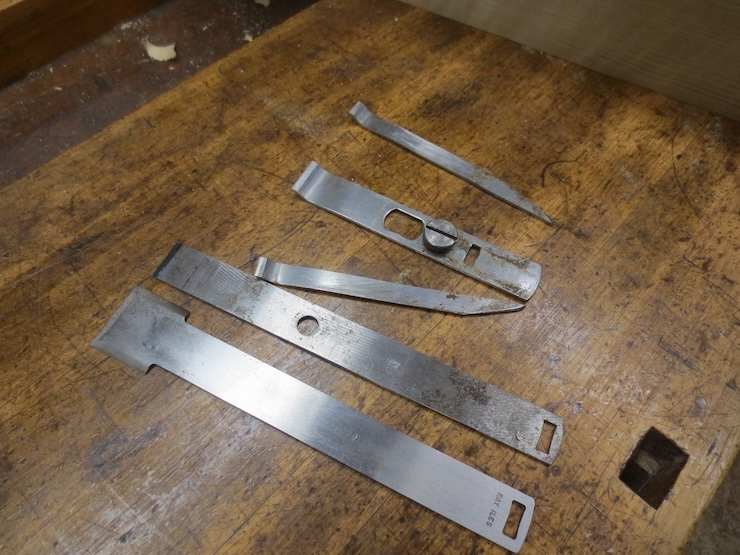
The blade is only tempered at the business end so it was easy to drill a hole to attach the chip breaker.
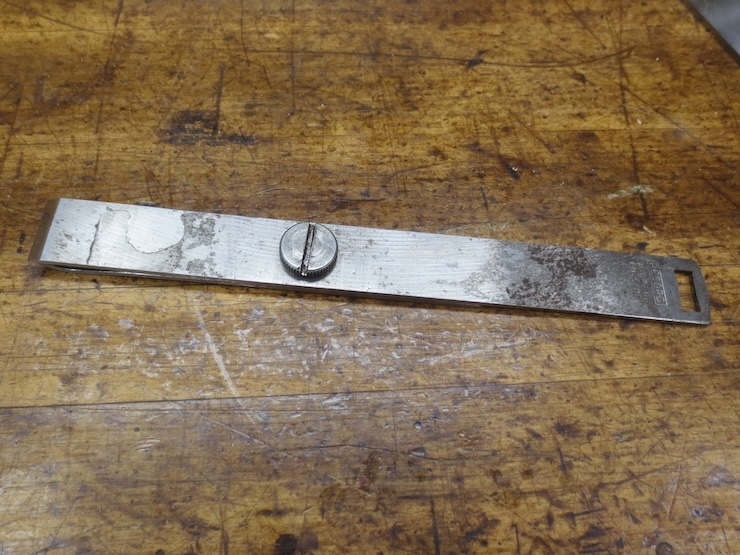
Here is the blade assembly from the bottom.
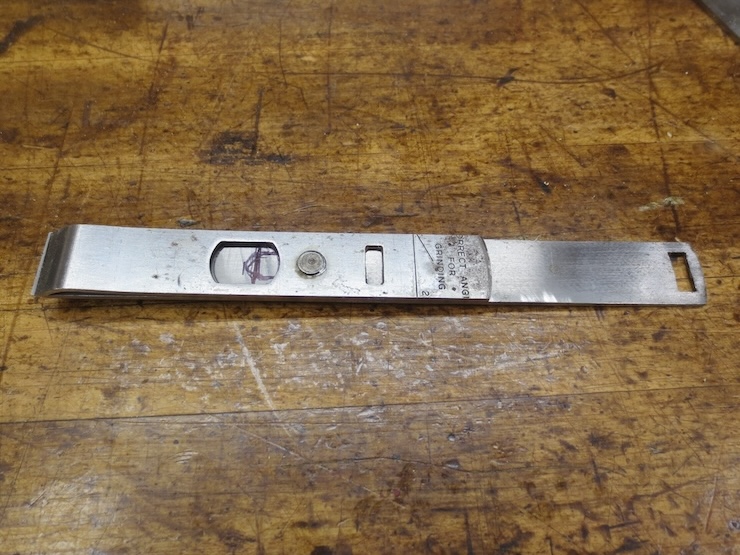
And from the top.
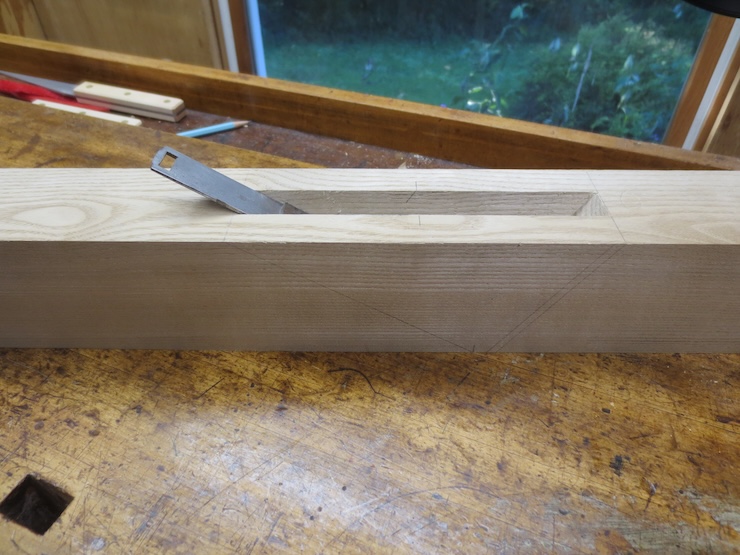
I found a nice piece of sassafras to make the plane body with. This is a soft wood and wouldn’t take the wear of hard working regular bench planes. But leveling ribs is a delicate task so this should be fine. I bedded the blade way down at 32 degrees to create a shallow slicing cut for the relatively soft larch ribs. This plane is just long enough to level a 16″ wide mould. I would have to extend the body or make a longer one for larger moulds.
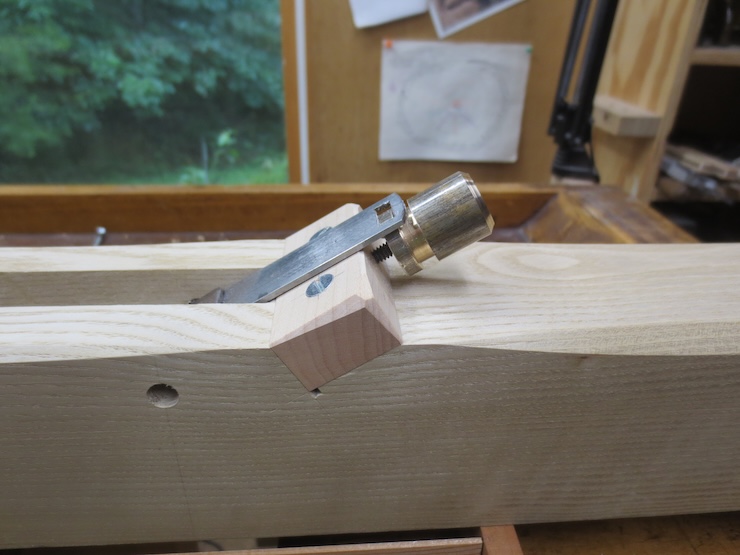
The blade adjuster.
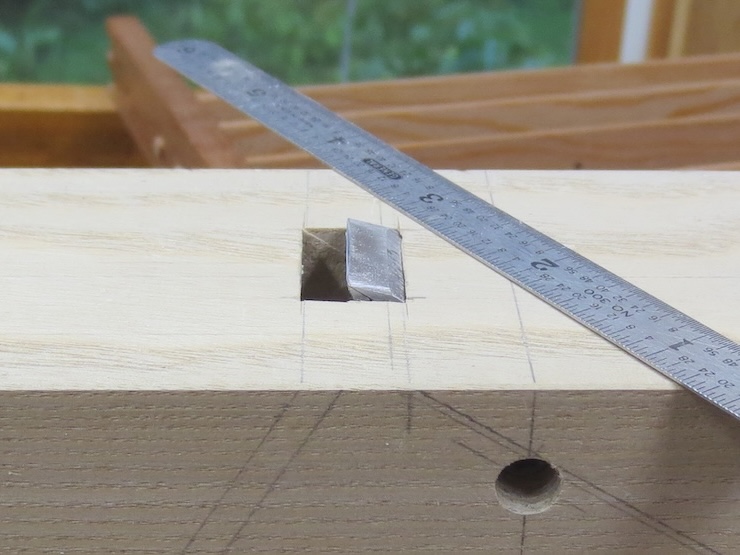
The oversized mouth allows the blade to be set very deep. When making double faced moulds the blade would be set like this since the ribs are set well below the sides. (The wooden bed of this plane will never touch the wood of the ribs. It rides on the top edges of the mould frame.)
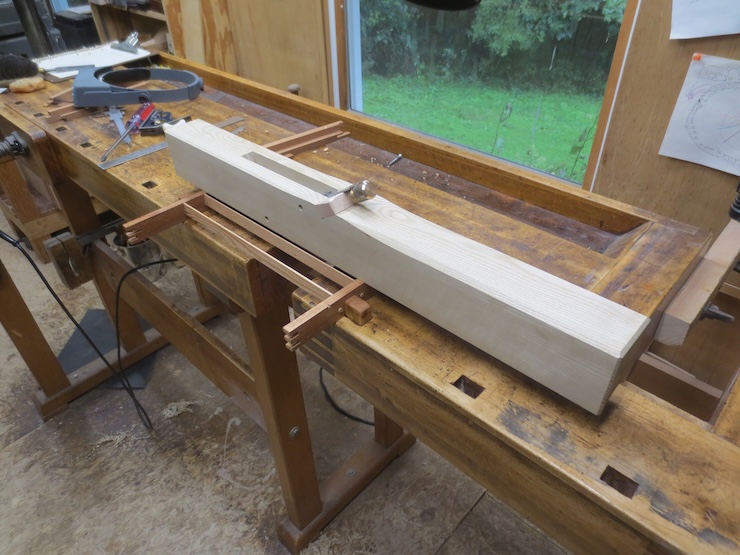
I found some scrap parts to mock up a ‘mould’ to test the new plane.
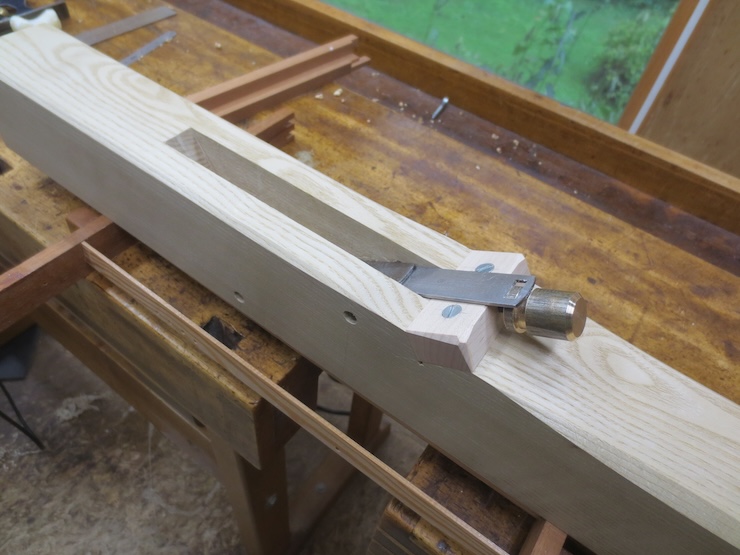
It works very well and should prove faster and more enjoyable to use than the scraping method I have been using (for 40+ years!).
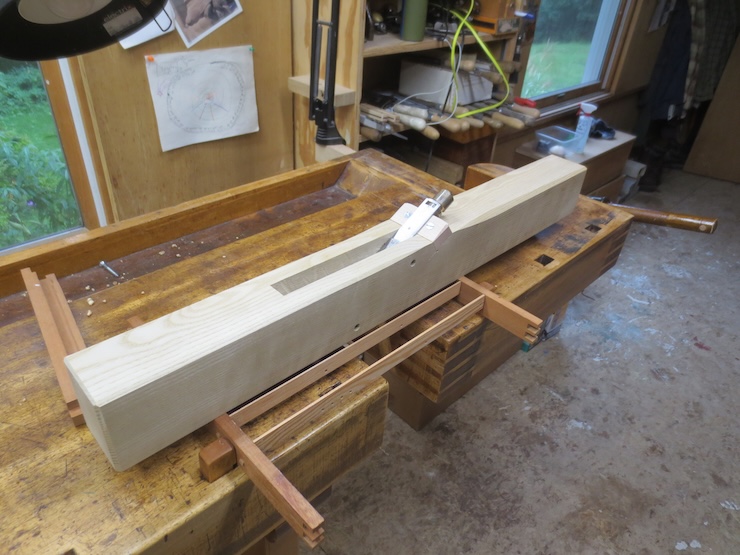
The holes on the sides of the plane hold set screws (two on each side) which are used to adjust and secure the lateral alignment of the blade.
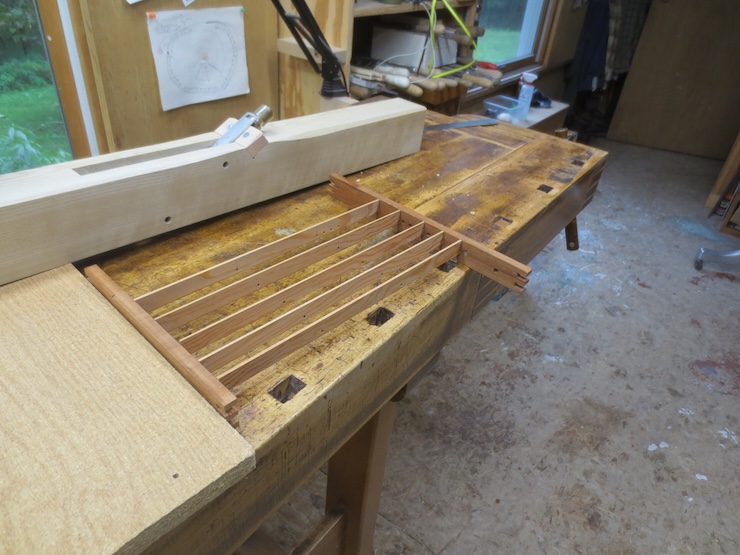
In a normal plane the flat bed of the plane presses down on the wood near the cutting edge to help prevent tear out. That’s not true here since the plane’s body never touches the surface being planed For this reason I worried that the sharp blade might tend to pull the ribs up, ‘chattering’ to creating an irregular surface.
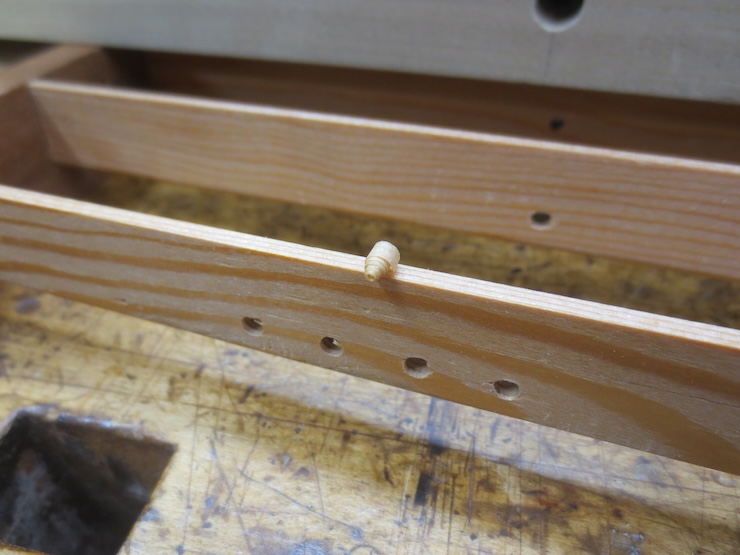
Not a problem it turned out. I even tried taking heavy cuts with pretty good results but this is probably the heaviest cut I’d make.
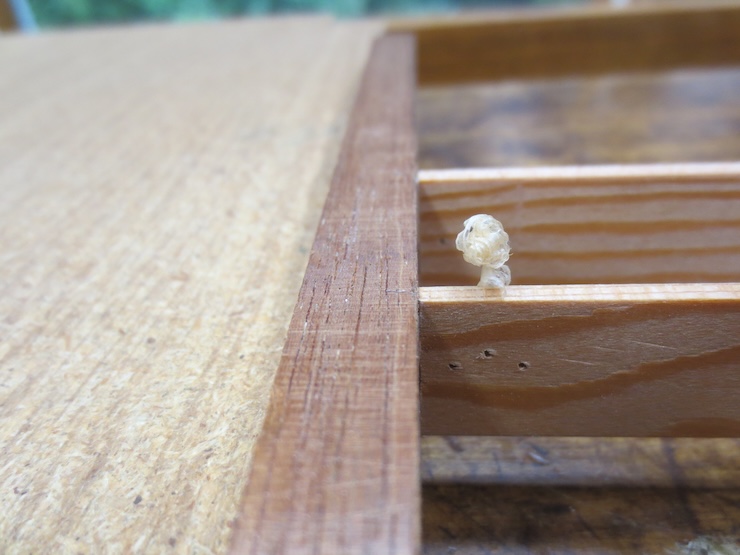
For the best results the last cuts should probably be very fine.
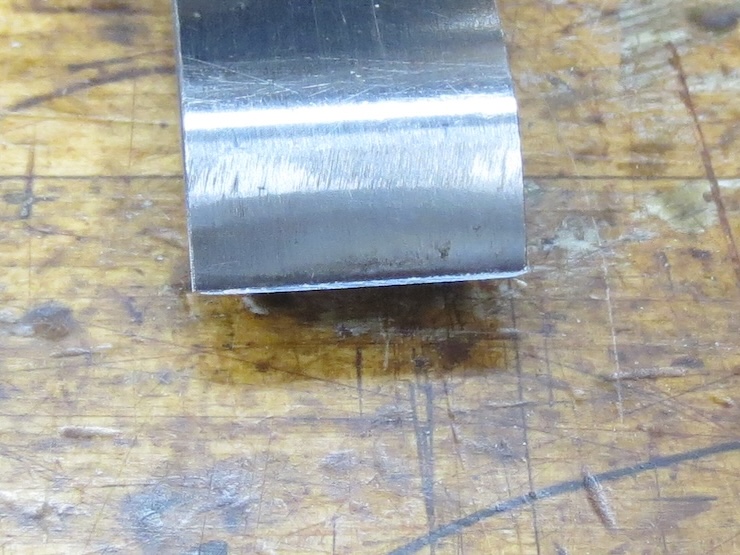
Here is the chip breaker set close to the edge. A chip breaker breaks the shaving before it has a chance to lift and fracture the fibers of the wood farther down.
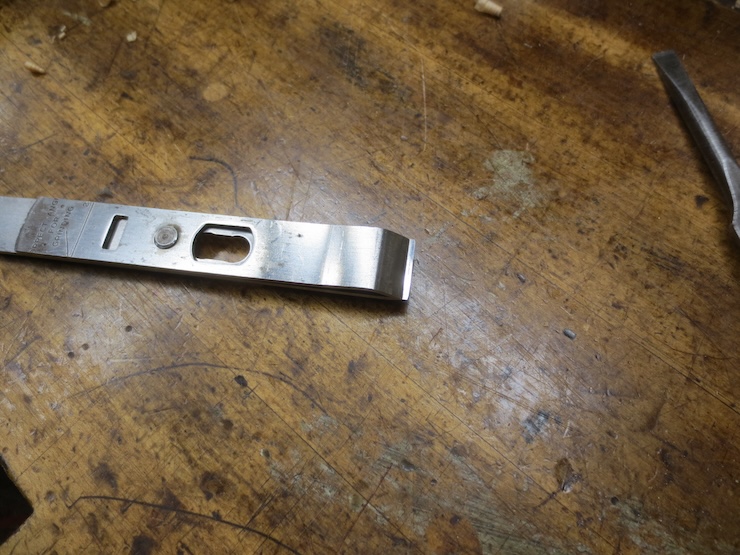
But when I set it well back like this (making it pretty much non-functional) the plane still worked very well! It may turn out to help with difficult grain-it’s hard to say at this point. A simple, one part blade may be the way to go when making one of these planes.
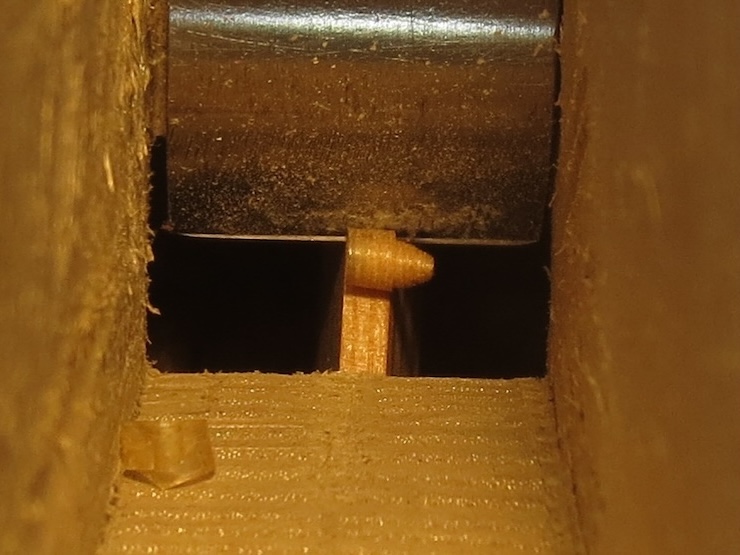
Taking a shaving. The close set chip breaker should help prevent tear out but does it?


That’s a beautiful tool, fantastic!
LikeLike