Way back when (in the 1980s) when I started working to make a mould maker’s loom I made a total of 45 one pound steel weights. This determined the maximum number of chain wires that the loom was capable of and I’ve stuck with that number since. This would make a very large mould! For this test I distributed 45 of the new adjustable spindle units on the loom in order to see whether the loom could handle this (heavy) job. It also provided another test for the new spindle units which have performed very well on smaller wire facings.
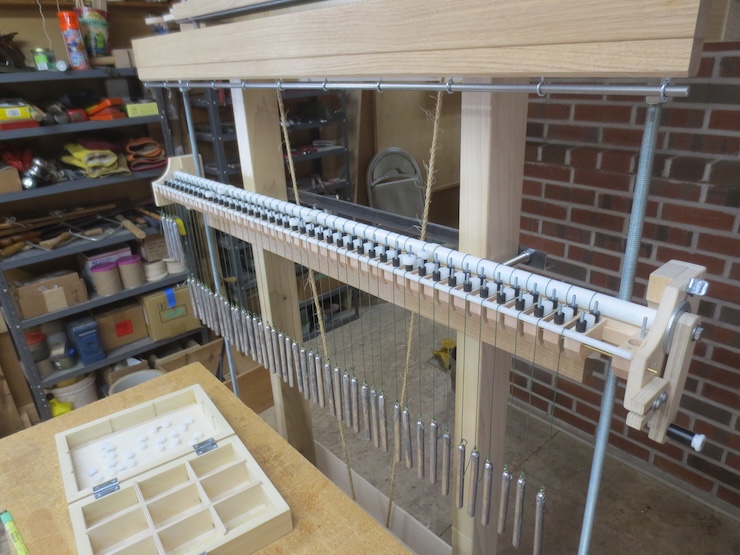
Here I have positioned the spindle units evenly along their rack and added all of the drive weights to the cord reel. In my wire supplies I found about a hundred and fifty .020″ diameter wires which were 40-1/2″ long. This was about right for running this test though not enough wires to make much width. The drive weights used here are a different shape and weigh slightly more than the old tear drop shaped ones which are no longer made. These “pencil sinkers” aren’t as attractive but seem easier to use so far.
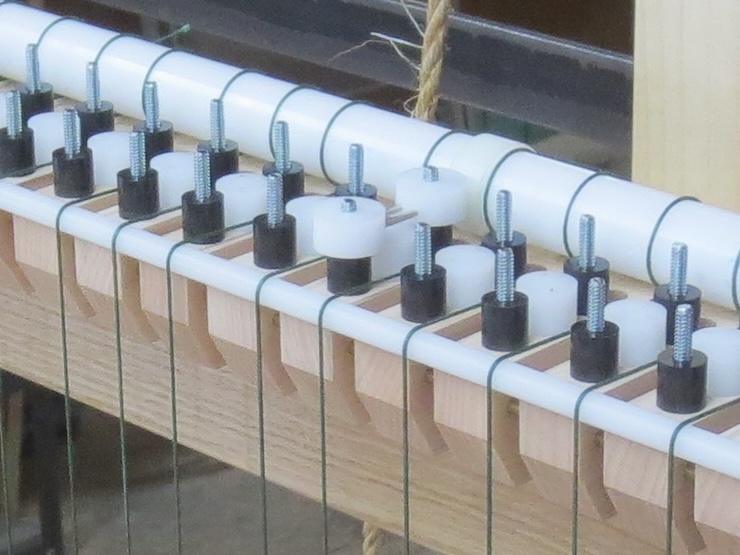
The forty-five 2-1/2 ounce drive weights pulled pretty hard on the cord reel. I temporarily placed three of the wire support assemblies (one shown here near the middle) along the length of the traveling beam. A short plastic bushing rides against each of these and holds the reel up so the drive cords don’t rub. These bushings are a new discovery and work very well. The wire supports aren’t usually put on until after the cords are wrapped around the spindles.
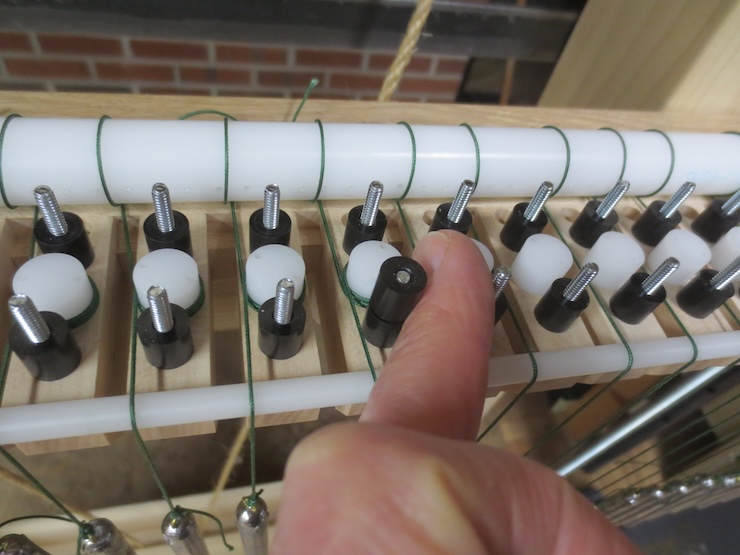
Wrapping the drive cords requires some fancy finger work. The steel studs threatened to abrade the back of my finger and I found that adding an extra black plastic spacer created a much more comfortable situation. You just move the little tube along as you move from spindle to spindle.
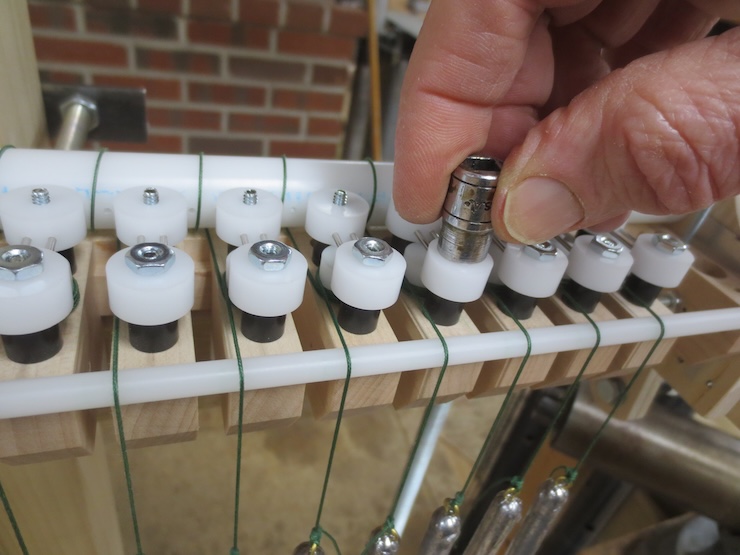
A socket wrench makes it easy to lightly snug up the nuts to secure the wire supports.
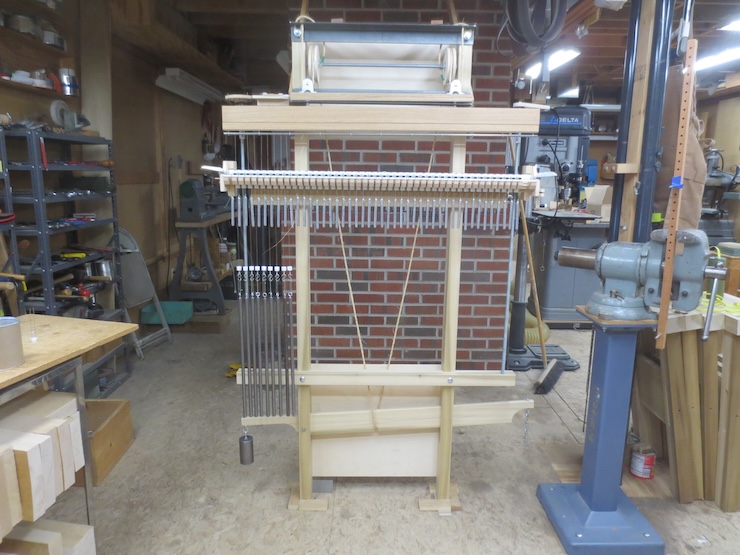
Now the chain wires are being strung and wire weights added. The lift beam tilts up on the right due to the uneven weight (so far). These new ‘skinny’ wire weights are 1/2″ diameter and 18″ long. They weigh the same as the older 3/4″ x 8″ ones. The two shapes have advantages and disadvantages. The thinner, longer weights are easier to use with closely spaced chain wires but put a smaller limit on the width of the facing (unless I cut a slot in the floor so they can hang down lower). I think the maximum width may be reduced to about 20″ . The loom frame is designed for a maximum width of about 29 inches. It’s not likely that ‘ll be making a mould that wide. (Keep in mind that the ‘width’ of the facing is measured vertically when it’s being made on the loom.)
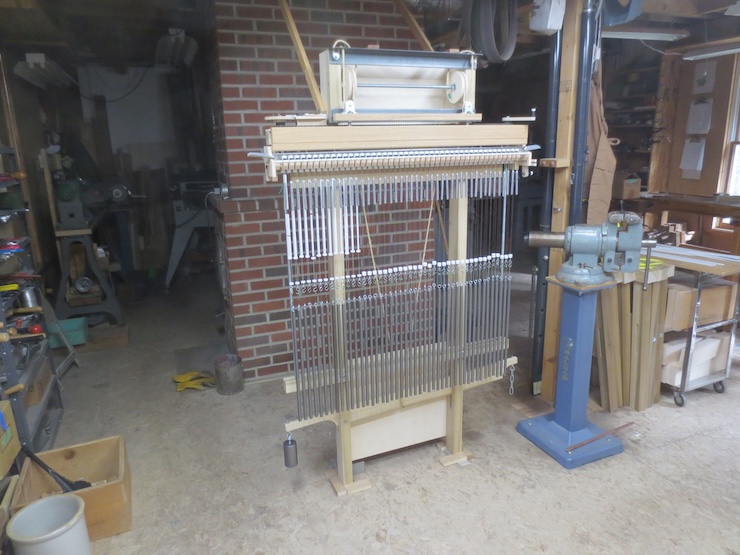
After all the weights are added the foam board spacers are added.
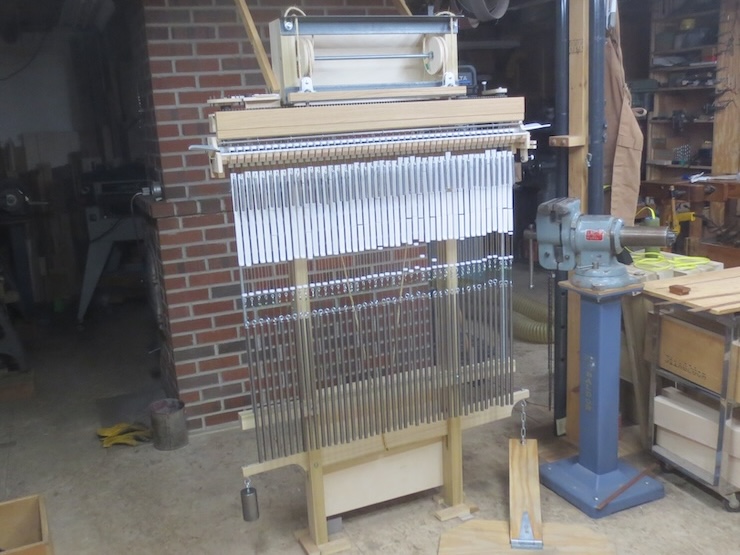
The loom is ready to go. I found that the 45 lbs. could in fact be raised by the foot treadle. (I had my doubts). I did have to adjust the lift rope a little tighter and of course the lifting felt different.
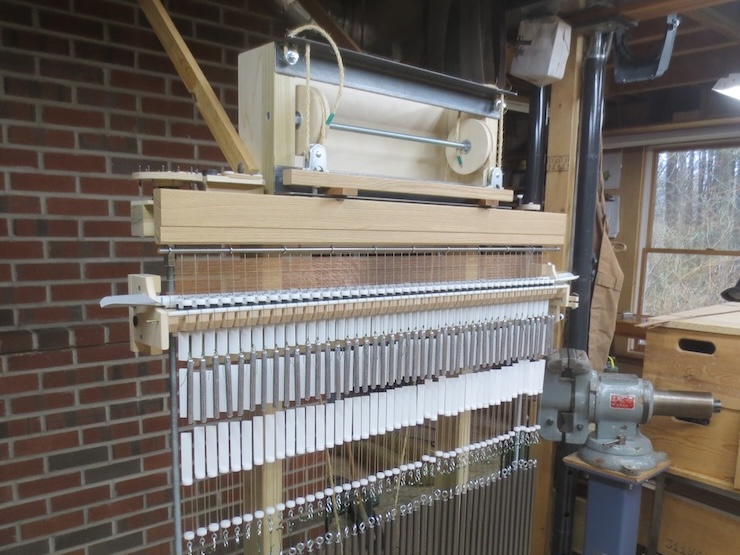
All the wire twisting weights add up to a little over 7 lbs. so turning the crank felt different too. But it worked.
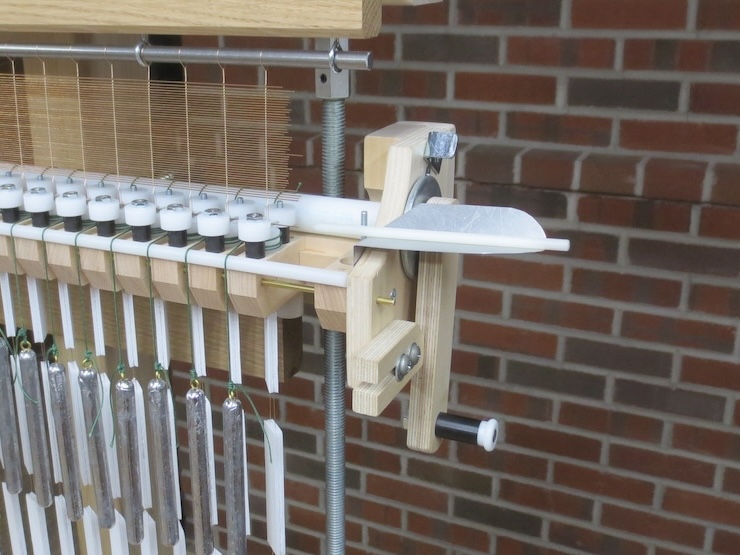
I had to make little sheet metal extensions to hold the shuttle at each end. You start the tip of the shuttle between the wires before inserting a laid wire into the hole in its end.
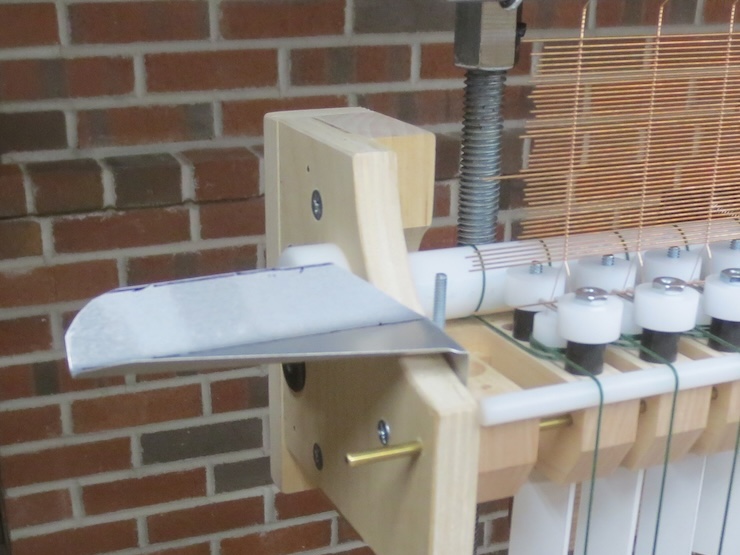
This one catches the shuttle so it doesn’t just fall on the floor each time.
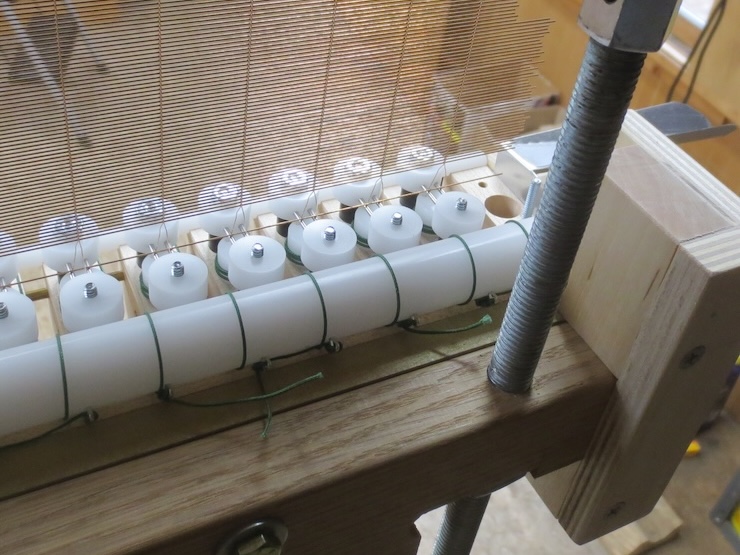
A view from the back which I hadn’t yet photographed. This loom isn’t fastened to the wall so you can walk behind it. The loom has worked very well ‘fully loaded’. I’ll be adding laid wires and using up the full length of the chain wires and will likely add to this post.
 Timothy Moore Bookbinding Tools